In Pursuit of Excellence !

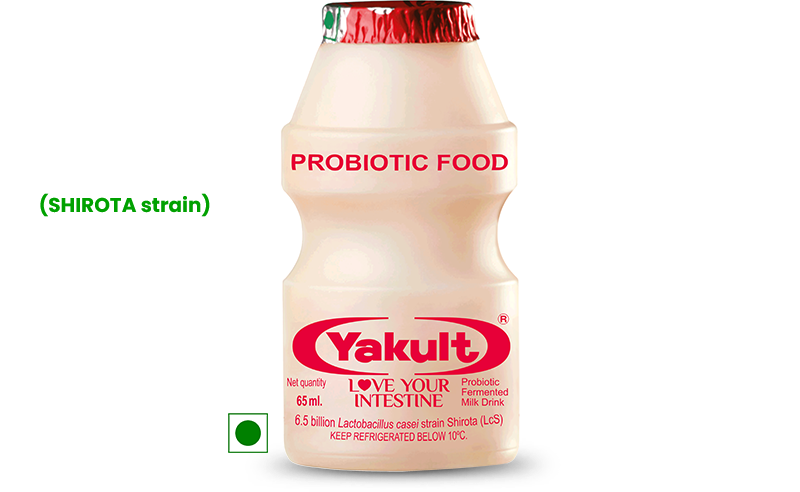
In 1930 Dr. Minoru Shirota a scientist at the Kyoto University discovered Lactobacillus casei strain Shirota, a probiotic bacteria that reached the intestines live in large numbers to impart tremendous health benefits. At that time Japan was an economically weak country and a number of people mostly children were dying due to diarrhea and dysentery. Dr. Shirota used this strain of bacteria to make Yakult so that he could reach the benefits of the strain to one and all.

With the discovery of Lactobacillus casei strain Shirota, Dr. Shirota's endeavor was to reach the tremendous health benefits of this strain to the community at large.

He established the Yakult Central Institute for Microbiological Research (YCIMR) in Kunitachi city, Tokyo in 1967.

This institute is dedicated to research in the field of life sciences and micro organisms. YCIMR focuses on research for the development of functional foods, pharmaceuticals, cosmetics and other products. With more than 250 highly qualified and dedicated scientists, Yakult is committed to discovering newer and newer possibilities for the use of bacteria as effective probiotics in the area of disease prevention and health improvement.

Scientific evidence for the efficacy of Lactobacillus casei strain Shirota -

Top
Viability of Lactobacillus casei strain Shirota in the gastrointestinal tract :

  • Evidence for the viability of Lactobacillus casei Shirota in the intestines and their tolerance to synthetic gastric juice and synthetic bile was demonstrated by Kobayashi et al. in 1974.
  • A number of clinical trials have also shown the viability of LcS in the lower intestinal tract following consumption of Yakult (Shirota et al., Japanese Journal of Microbiology 21 (5), 274- 283, 1966, Tuohy etal, Journal of Applied Microbiology(102) (2007 ).
    click here to read more

Effect on the composition and metabolic activities of the intestinal micro flora:

researchimage

  • The effect of consumption of milk fermented by Lactobacillus casei strain Shirota (LcS) on the composition of the intestinal micro flora has been shown in a placebo controlled trial that was done for eight weeks. The results of this study showed that ingestion of LcS fermented milk results in an increase of the Lactobacilli count in faeces in which the administered Lcs was predominant at the level of 107CFU/g wet faeces. This was associated with a significant increase in the Bifidobacteria count and a decline in ß glucuronidase and ß-glucosidase activity (Spanhaak et al, European Journal of clinical nutrition 52(12) 899-907 (1998). click here to read more

Improvement in gastrointestinal disorders
Top

  • Constipation : Double Blind Placebo controlled study in patients with chronic constipation showed that daily consumption of Yakult resulted in a significant improvement in severity of constipation and stool consistency (Koebnick et al : Ernahrungs-Umschau 48,10, 2001, Koebnick etal : CanJ Gastroenterolo Vol 17, No 11 , 2003
    click here to read more
  • In a placebo controlled double blind cross over study intake of LcS 4x10⁹ bacteria/bottle for 2 weeks showed that defecation frequency both in times per week and days per week increased significantly in the LcS group. The differences were notable in those with a stronger tendency to constipation and the frequency of defecation in the LcS group was significantly higher than in the placebo group (Matsumoto et al, Bioscience Microflora Vol 25 (2) 2006. click here to read more
  • Diarrhea : There was a significant decrease in the severity and duration of rotavirus diarrhea in children when they were given LcS along with the normal course of treatment (Sugita and Togawa, Japanese Journal of Pediatrics 47 2755 -2762 (1994).
  • An uncontrolled proof of concept study on patients who had IBS (Rome 11 criteria) was done to evaluate the role of LcS in altering Small Intestinal Bowel Overgrowth (SIBO) and changes in symptoms of IBS. Of the 14 patients who completed the study 9 had reversal of ERBHAL and significant improvement was seen in the passage of wind which may be related to bacterial overgrowth and fermentation. The findings need to be underpinned with well powered double blind placebo controlled trials.(Barret et al, World journal of Gastroenterology 14 (32) 5020-5024, (2008). click here to read more

Immunomodulation

Top

  • NK cell activity increased after consumption of Yakult for 3 weeks. Effect was particularly prominent in Low NK individuals(Nagao etal Biosci Biotechnology Biochem 64: 2706-2708,2000)


  • NK cell activity significantly higher in smoker who consumed fermented milk drink containing Lactobacillus casei strain Shirota (Morimoto etal ,Preventive Medicine 40, 589- 594

Prevention of Recurrence of Cancer

Top

A multi center clinical trial conducted by Aso et al. reported a reduction in the recurrence of superficial cancer in patients given 3 g of Biolactis powder (BLP), a freeze dried preparation of the Probiotic LcS daily. The one year recurrence free rate was 79% in the group of patients receiving the powder compared with 55% in the group receiving a placebo (Aso etal, Urologia Internationalis 49 (3) 125-129, 1992).
click here to read more

• A second study by the same group showed that the powder also has a preventive effect on the recurrence of superficial bladder cancer (Aso etal, European urology 27 (2), 104-109, 1995).click here to read more

• Occurrence of tumors were significantly lower in the Lactobacillus casei strain Shirota group who were free from tumors but had at least two colorectal tumors removed ( Ishikawa H et al Int. J. Cancer 116 :762 -767, 2005).
click here to read more

Others
Top

• An open label study on 12 patients with alcoholic cirrhosis received LcS (6.5x10⁹ CFU) 3times daily for 4 weeks. The proof of concept study showed that probiotics restore neutrophil phagocytic capacity in cirrhosis possibly by changing IL 10 and TLR4 expression warranting larger randomized controlled trials.(Stadlbauer etal , Journal of Hepatology 48 945-951, (2008).
click here to read more

• Placebo-controlled study where 39 patients were randomized to receive either 24 billion CFU of Lactobacillus casei strain Shirota or a placebo daily for two weeks. Significant increase in Lactobacillus and Bifidobacteria in the LcS group and significant decrease in anxiety symptoms among those taking the probiotic vs. control. (Venket Rao et al, , Gut pathogens,1-6 (2009).
click here to read more

 
researchimage
researchimage