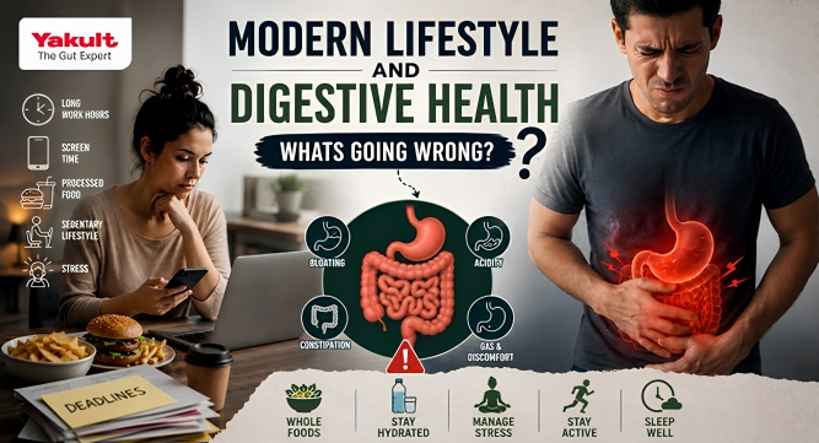
Okay, real talk — your gut has been sending you signals for a while now. That bloating after lunch? The heavy feeling after you inhale a meal? The discomfort you have just quietly accepted as your new normal? These are the patterns that we usually ignore, and too many of us are dealing with them.

We Have Engineered Convenience at the Cost of Our Gut
Think back to everything you have eaten in the last 24 hours. How much came from a packet or something that could survive on a shelf for months? This did not happen by accident because the modern food industry was built around speed and shelf life that outlasts your houseplants.
For many adults in urbanised countries, more than half their daily calories come from ultra-processed food, that researchers are increasingly linking to gut microbiome disruption.
And your digestive system has been doing it for years. It evolved by processing real foods. It was never built for instant noodles and energy drinks. And no matter how normalised those things become, your gut is not going to adapt but struggle.
The Microbiome: A Community You Keep Disrupting
Trillions of microorganisms live inside your gut. This gut microbiome influences your digestion, immunity, mood and even your metabolism. When it is balanced, you do not notice it.
However, when it is imbalanced, you feel it in everything whether it is your energy, skin, and focus. Antibiotics, even when you actually need them, wipe out the good bacteria alongside the bad.
Chronic stress floods the body with cortisol. And poor sleep? Just a few nights of disrupted rest has been shown to reduce microbial diversity. So you are not just eating your way to poor gut health, you are living your way into it.
Stress and the Gut-Brain Axis: More Connected Than You Think
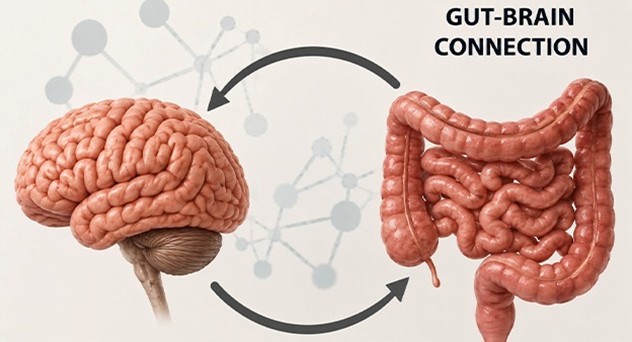
There is a reason people say they have a “gut feeling.” Your gut and brain are in constant communication via the vagus nerve. This means your mental state has a very physical impact on how you digest your food.
When you are under chronic stress, your body diverts resources away from digestion. Blood flow reduces. Enzyme production slows. The pace at which food moves through your intestines becomes unpredictable.
This is how stress shows up as Irritable Bowel Syndrome (IBS)-like symptoms, acid reflux, or persistent constipation, even in people who eat reasonably well. Your gut doesn’t lie.
Sedentary Habits Are Slowing Everything Down
Movement is one of the biggest and most underrated drivers of healthy digestion. When you move your body, it stimulates peristalsis, which is basically a wave-like muscle contraction that keeps food travelling through your digestive tract.
And when you sit at a desk for 8 to 10 hours a day, that whole process slows down. You don’t have to do a lot to fix it. A 20-minute walk after meals, that’s it.
Moreover, in a world that moves this fast, the simplest thing you can do for your gut is grab a Yakult. It takes three seconds, fits in your bag, and it’s quietly doing the work your busy schedule doesn’t leave room for.
What Can Help?
The good news is that your gut responds quickly to positive changes. You just need to make small, consistent shifts.
Start here:
- Prioritise fibre. Choose plant-based foods.
- Slow down at mealtimes. Don’t eat quickly under stress.
- Consistent, quality sleep directly supports microbial diversity.
- Go for a short walk after eating.
- Take stress seriously for your gut’s sake. Mindfulness, rest, whatever works for you.

Lastly, it is important to understand that your gut health is not separated from your mental health, immunity, and energy. And modern life, whether it be fast food, chronic stress, too much sitting, too little sleep — it all has been quietly working against it for years.
Your gut has handled more than it should have. It is still trying, and now it’s your turn to return the favor.